

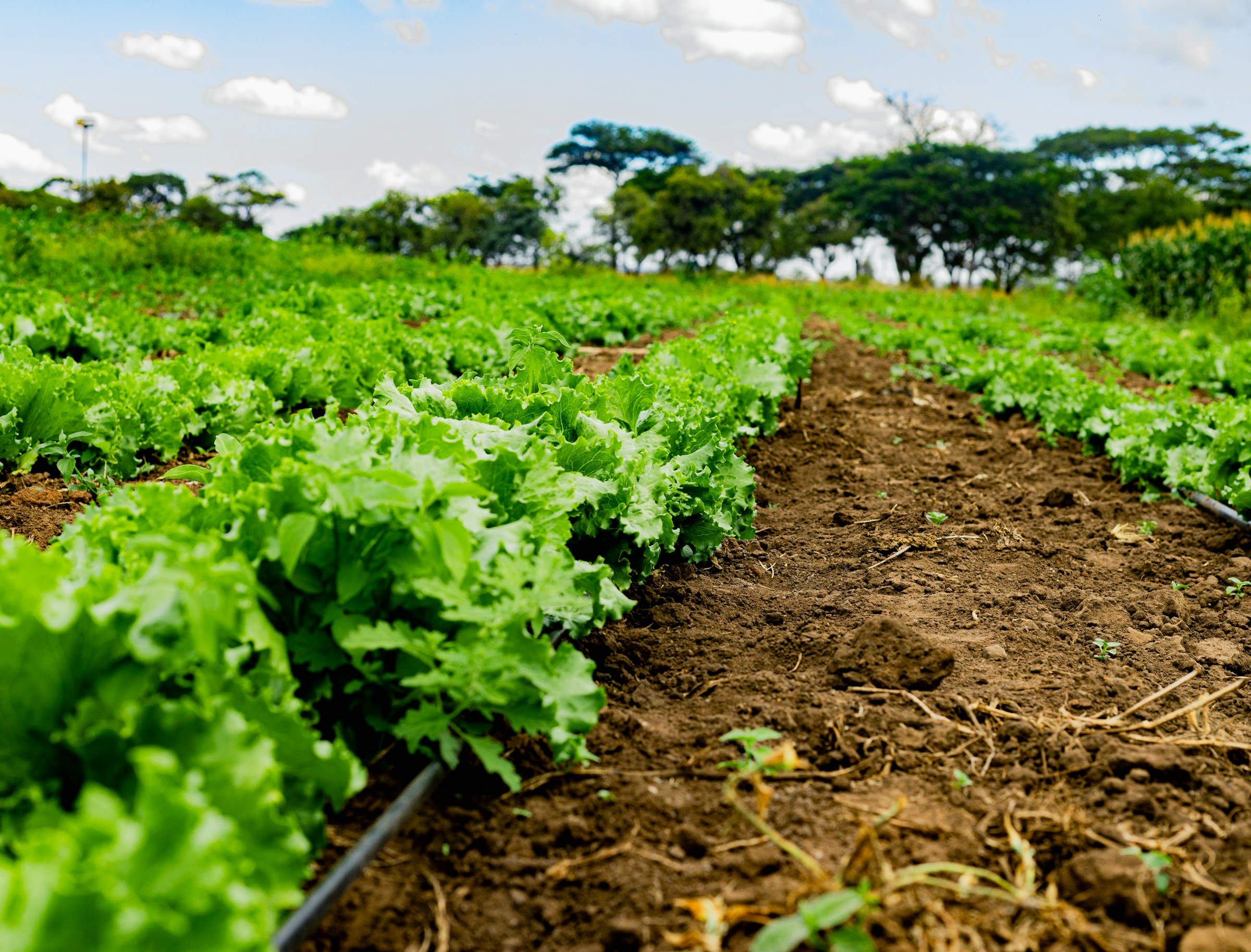
4Stone Farms is an innovative agricultural enterprise focused on advancing farming practices in Nigeria. As a subsidiary of 4Stone Capital Limited, it draws on expertise, technology and strategic partnerships to support sustainable agricultural development. Through modern farming solutions, the enterprise aims to contribute to Nigeria’s food security and economic growth.
The real test of an agricultural business, however, is not simply how much it produces. It is how effectively it converts land, labour, capital and other resources into marketable produce and sustainable returns. A larger harvest can still result in disappointing financial outcomes when production costs rise, produce deteriorates before sale or market prices fall. Understanding this distinction is essential to building an agricultural enterprise that can endure beyond a single successful season.
When a Bigger Harvest Does Not Mean Better Returns
Nigeria’s agricultural sector recorded 4.39 per cent growth in the second quarter of 2026, while crop production grew by 3.66 per cent, according to figures from the National Bureau of Statistics cited by the Federal Government in October. The figures indicate growth in agricultural activity, but they do not, by themselves, establish whether individual farms have become more profitable.
Consider a hypothetical farm that increases its harvest but also spends substantially more on inputs, labour and transportation. If the additional produce must be sold quickly at a lower price, the farm may earn less than expected despite producing more. The outcome depends not only on yield, but also on the cost of achieving it, the quality of the harvest and the price ultimately received.
This is why production targets should be assessed alongside commercial measures such as cost per unit, expected selling price, post-harvest losses and the margin remaining after relevant expenses. Without this broader view, higher output can create the appearance of progress while placing additional pressure on the business.
The Economics of Getting Produce to Market
An agricultural product does not retain its full commercial value simply because it has been harvested. Its value can be affected by how it is handled, stored, processed and transported, as well as by how quickly a suitable buyer can be reached. These factors are especially important for perishable produce, where delays can reduce quality and limit selling options.
Suppose a farmer harvests more produce than can be sold immediately. Without adequate storage or a reliable route to market, the farmer may have to accept a lower price or risk losing part of the harvest. Better storage or processing may help, but each requires investment and operating costs. The business must therefore determine which solution is commercially justified, rather than assuming that every additional facility will automatically improve profitability.
Market access also involves timing and coordination. Understanding likely demand, arranging transportation and planning sales before harvest can help reduce avoidable uncertainty. The objective is to align production decisions with realistic routes to market, so that the value created on the farm is not unnecessarily lost before it reaches the buyer.
Technology Should Earn Its Place
Technology can improve agricultural productivity, but the relevant question is not whether a tool is modern. It is whether the tool solves a significant problem at a cost the business can sustain.
Mechanisation, for example, may reduce reliance on certain labour-intensive activities or help complete operations within a suitable timeframe. Yet the financial case depends on the cost of acquiring or accessing equipment, maintenance, fuel, operator skills and how frequently the equipment will be used. Depending on the scale of operations, hiring equipment or collaborating with a service provider may be more practical than purchasing it outright.
The same principle applies to digital tools, irrigation systems and other innovations. Their value should be assessed against measurable improvements in productivity, quality, resource use or operating costs. Strategic partnerships can help businesses access capabilities they lack, but clear responsibilities and reliable execution remain essential. Innovation delivers meaningful results when it improves the economics or resilience of the operation—not merely when it introduces something new.
Building for Sustainable Agricultural Growth
Agricultural businesses also face a timing challenge: many costs must be paid before the harvest generates revenue. Planning for inputs, labour, transport and other operating expenses therefore requires an understanding of cash flow, not just projected sales. A business may appear commercially promising on paper yet struggle to meet its obligations if income arrives later than expected.
Planning should account for different possible outcomes, including lower selling prices, higher input costs and delays in getting produce to market. This does not eliminate risk, but it helps decision-makers understand how much capital an operation needs and which uncertainties could undermine its viability. Production plans, market arrangements and financial decisions should inform one another rather than operate as separate considerations.
For 4Stone Farms, the wider opportunity lies in the challenge facing agricultural enterprises across Nigeria: connecting farming innovation with efficient operations and sustainable commercial value. Its published profile identifies expertise, innovation, strategic partnerships and modern technology as part of its stated ambition. The practical significance of these priorities lies in how effectively they can support productive, resilient agricultural activity. No particular crop, technology or operating model should be assumed without confirmed information about the company’s activities.
Nigeria’s agricultural opportunity is therefore about more than increasing the quantity of food produced. It is also about improving the systems that make production viable, from resource allocation and farm management to storage, distribution and market access. When these elements are planned together, agricultural businesses are better positioned to turn production into lasting value.
The measure of agricultural productivity is not simply what a farm grows, but how effectively it preserves, sells and creates value from what it produces.
Recent Articles